

Unlocking your best work through systems designed for collective excellence and individual brilliance
Resumes are fine, but who is Sam really?
The real story is much more interesting…
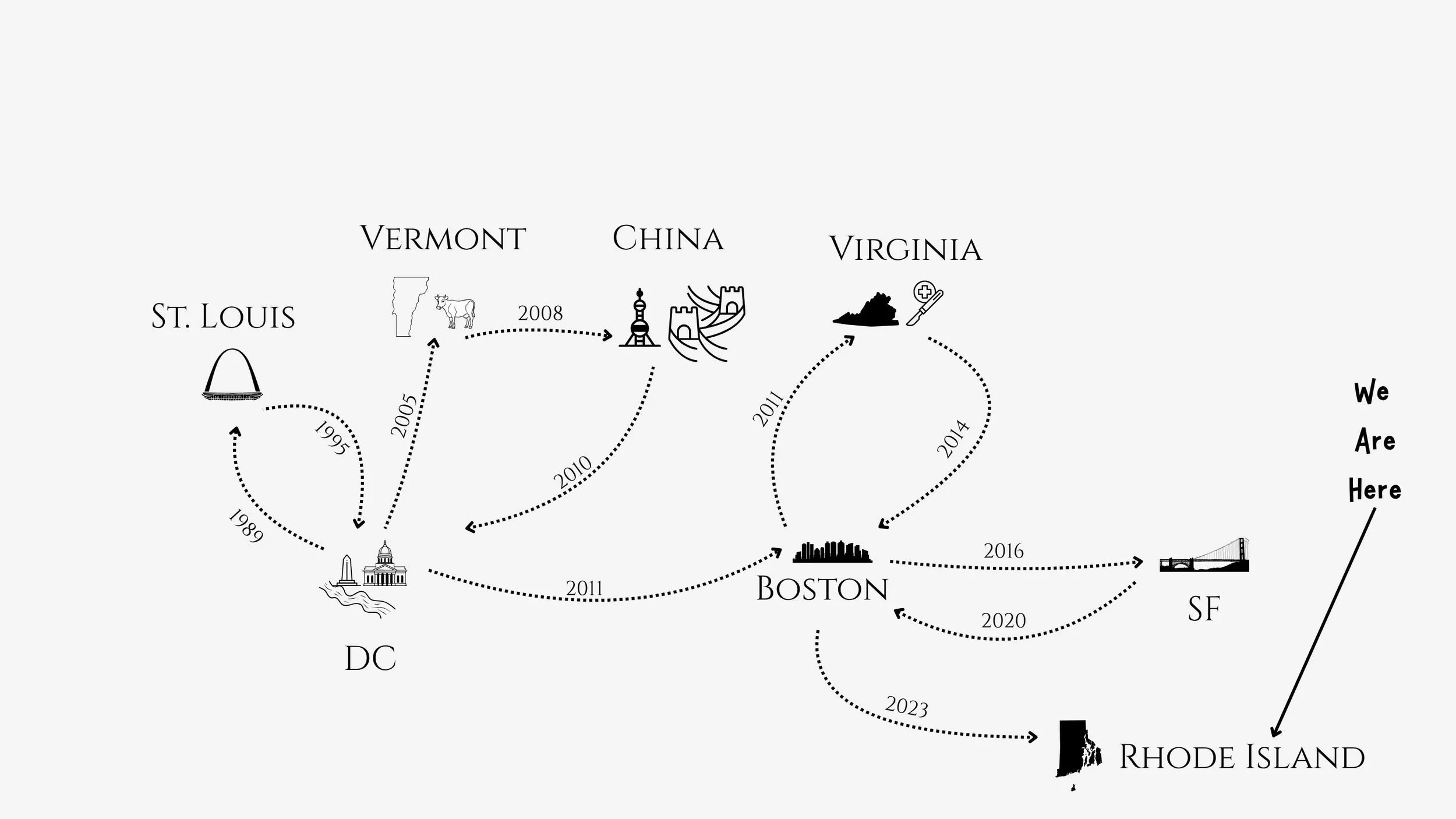
Look familiar? Well, one of my absolute unapologetic loves is rollercoasters and you’ve ever been on a rollercoaster, you know that they never go in straight lines.
But through life’s hills, corkscrews and airtime, I’ve gotten clear on the important things:
What Drives Me:
The last time I can remember really being presented with the “infinite freedom of choice” was in college. So I suppose it should not be surprising that the two elements I discovered were my personal drivers through that experience continue to be what fuels my deepest intellectual pursuits today.
They’re captured quite neatly by my two majors (even if they were chosen decades ago):
Geography → The study of how people and places interact
Mandarin Chinese → The study of how to celebrate individual achievement in the context of collectivist, societal good.
Why Geography:
Like a lot of kids, I moved around a lot growing up. Even earlier today when writing this little piece I filled out a questionnaire that asked “Where are you from?” and found myself struggling to answer it.
In college I used to tell people “I’m from a riverbank” because I had always grown up along them and I felt like they represented the transitory, always-moving state that seemed to be my modus operandi. As I got older, that question became even more difficult to answer.
But that’s largely because I am a big believer that we are shaped immediately by the land that we have called home for some period of time. To me, it’s the greatest explainer of what motivates us and what nurtures us when we’re able to truly quiet our minds of other people’s beliefs and voices. To me, the land always held our answers.
Perhaps the most intimate question I sometimes ask people is to either metaphorically (or actually) take me to a place where they from that feels meaningful and then to tell me why. My favorite part in asking the question is that I know we’re in the right place when they don’t know how to answer the second part of my question.
There is something transcendent and pure about witnessing how people choose to understand their relationship to the land that shaped them, even if they moved a lot. As someone who wants to get as close as I can to the unspoken but core motivators at the root of everyone’s microdecisions throughout their day, there is no more pure method of understanding someone than to see the world and the land through their eyes.
Geography has taught me that place matters and perhaps even more importantly in this digital age that existing in real-life matters. It’s the antidote to the metaverse; the salve that saves you from your social media feed.
Geography has always been my key to unlocking my (and everyone else’s) heart for the moments that matter the most.
Why Chinese:
To be frank, it took me until I was 3 years deep on studying the language when I learned why I was studying it.
By that point I was as fluent as I’d likely ever be, dreaming every single night in Chinese and in my spare moments writing characters in the air as if they were little non-denominational prayers I was sending up into the heavens. And it was in one of those pre-smart device moments while riding an overnight train between Xi’An and Chengdu that I struck up a casual conversation with someone while sitting in the dining car about why I was in China in the first place. It took only took a few minutes talking to him before he dropped this one on me:
“Did you know that if you’re one in a million in China that means there are 1,300 people just as special as you are?” He told me as he breathed out the cigarette smoke that had been collecting in his lungs. “But, even so, I know there has to be something that’s different about me.”
The man had self-identified to me originally as just another “Lao Bai Xing” (老百姓·), a colloquialism for “ordinary person” that literally means “Old Hundred Names” in reference to the idea that all names in China can trace back to a list of 100. And here we were, staring out the window at the sunrise peering over the eastern hills of Sichuan province, looking out for what made us special and different.
What’s unique about China is that it could easily look like Europe today; the cultural range of life experiences so vast that the differences between the coastline of Shandong and the far jungles of Yunnan would appear no less drastic than comparing the Scottish Highlands to the Greek Isles. But what’s set it apart is its historical ability to give itself a strong sense of identity and perhaps more importantly a collective identity that traces back thousands of years. In its history there has always been place for people to find themselves and their sense of pride. Yet, it is still a country that has always lived on a knife’s edge about how it promotes self-expression and exploration.
I studied Chinese because I wanted to know how a society could do just that. How could a group of people create enough shared culture and hold just enough room for individual specialization to not disrupt the order. And as you’ll see from my career, that’s been one half of the root of every professional I’ve held since that train ride.
So what?
Every job I’ve ever done has been about understanding what drives someone, where that drive is sourced, and how to create experiences that honor and celebrate those phenomena in a means that leave someone else feeling seen.
Sound a little high-fallutin? I promise you it’s always played out that way in practice.
As a Chief of Staff, my job has always been about unlocking people’s best work and building systems around them that scale with them so they can do that work effortlessly.
In Fundraising, my job has been to unpack the various and complicated web of incentives at play in any ecosystem to ensure that the capital that wants to find us does without question of intent or competing agenda.
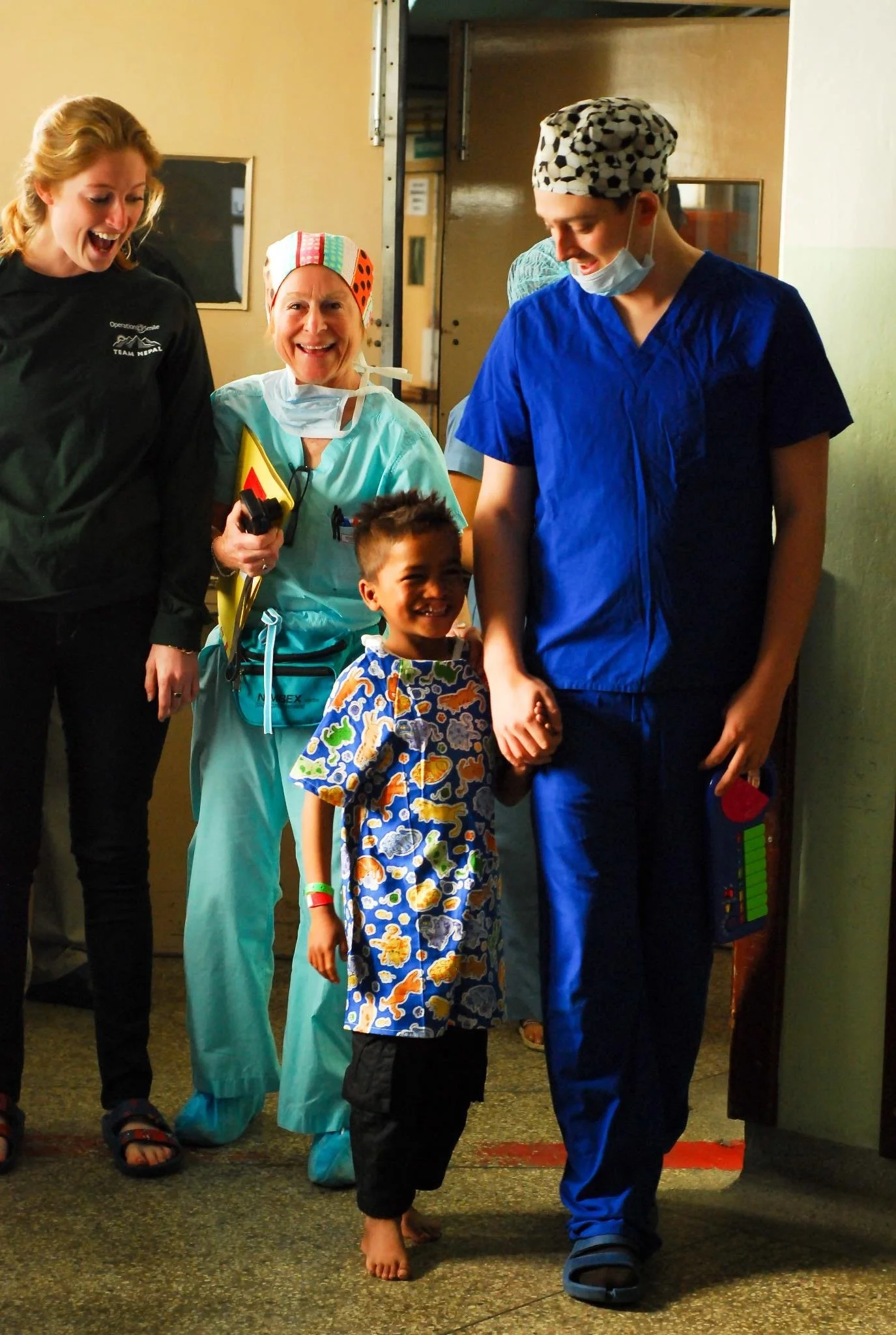
As a Program Officer, managing 100+ volunteers in hospitals, it was always my job to make sure that someone felt supported and heard well enough that when things got hard (and they always did) that they met the moment with authenticity and truth, because, after all, the opposite of love is not hate but apathy.
As a Disability Tech Advocate, my job has been to work with founders and customers who have been systemically excluded from a system and to give them the courage and presence/optimism/belief that their voices matter when we build a more inclusive world.
These may sound like more serious examples, but I promise you that it plays out in every moment of my everyday. And, ultimately, it’s what drives me more than anything else:
“Creating environments that help others feel heard and supported and then building systems to leverage the best possible collective outcomes while not suppressing individual excellence”
Or perhaps more simply put:
“Have others trust me enough that they can be their best selves and in doing so creating the best outcomes for everyone”